Awareness Heals
Jun 02, 2026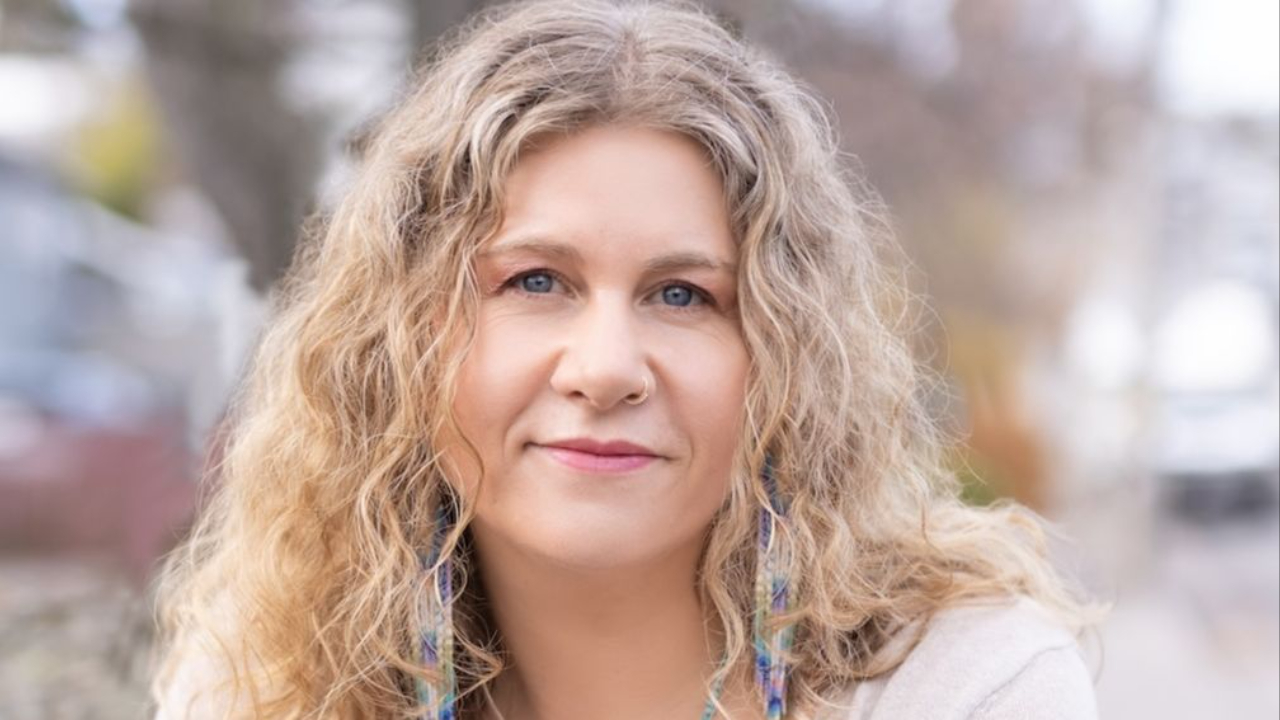
Observation is a key component to awareness. Looking through observation means you notice without telling a story, or being the story teller. You can watch from all different angles in equanimity in non biased, bipartisan balance. Like an artist noting the detail of her subject, she must continue to be drawn to the subject, to remeasure, to take note again, to be with every finite detail, not of what she thinks the subject looks like, to the light and shadows that her eyes pick up. Continuing to look at who the observer is, can center you and bring you into the one who is resting in the witness.
When we center in this place of witness in the present moment we watch as we see, hear, taste, touch and feel the sensate world, the mind coming up with 80,000 thoughts a day as we think and imagine a future, with recurring memories from the past, and allow ourselves to be with and feel emotions. We call ourselves to attend and tend to the parts of ourselves we have put aside. When we can be with what is inside of us and hold it in honor and reverence we can connect and feel ourselves more deeply and wholeheartedly. When we are in connection to who we really are and what we really want to do with our time on earth, we find a deeper sense of purpose. When we bring awareness to our body postures and movements, we can consciously move in alignment and change the movement patterns by introducing new body awareness practices. To build and strengthen the parts of us that need more strength we can consciously connect with these parts of ourselves that are holding tension and we can establish and rebuild healthy relationships between us and our body parts.
Just today I was telling a client a great way to find center is to go to the furthest point in the range of motion, to the further outlier say, to the right. When you can’t go any further go to the farthest left. Without creating pain, do this a couple times to see yes comfortably I can go this far to either side, take note. Then come to the middle of both points, that is center. You can also do this in the direction forward and backward find the middle and you’ve arrived at center.. And in each joint you can also make a circle going right and then left clockwise and counter clockwise and then find center in the middle of the circle. By moving thought all the points in the circle, like a clock each five minutes, you could even do each minute of the circle to fence center. So Finding center.
When we take the time to receive bodywork we are spending the time on ourselves, to get to know where center is can alter your life. Balance the activity with rest and reflection so you can track the details and notice the patterns. Part of my job, really all of it is to be present with my clients whole being. I use my body as an intuitive instrument. Each teaching that I have received has been kinesthetically practiced and integrated into my physical matter, which has been altered by meditation, movement and massage. All teachings living in me as I move. You see in order to be there for someone else’s healing, you must know what healing is within your own body. Doing bodywork can be strenuous and so body mechanics for a therapist are imperative. In order to be a conduit and to move so much energy, a therapist does well to continually study movement forms and be embodied within themselves with a devotion that blossoms in a flow and rhythm that dances with the elements themselves.
When I as a therapist initiate and hold the alignment in my body, I use my whole bodies force as I balance my body weights in center and ground (use the support of gravity) and align my spine in order to have an upright position in my ribcage, shoulder girdle and joints. So that my arms and hands to have the strength to give the pressures I give. I have a lifetime of body mechanics from a variety of movement forms in order for me to tap into the earth forces and align with the sky forces. Ancient practices that study energy know and reveal that it is possible to receive, give, generate and harvest energy. And so, we become aware in order be with, to watch and see, and then step into the dance and the flow of life giving and receiving. Observing where we are in order to influence with clarity we choose with our higher self’s awareness where might be a better position to be in, a better choice, a path that is open, a bridge that is stable. Awareness provides greater insight and clarity. Awareness helps us to pay attention and to find balance and center.
Watch and take a look from the place of non-judgement, of acceptance and peace, inner knowing and contentment. Non duality with nothing to gain. Offering yourself reasonless love, paying attention with a soft allowing focus. Resting and abiding in a place within yourself heart centered and Loving authentically all parts of you. I do my best to hold this space for my clients, to anchor and example and invite you into a practice of presence, to heal.
Maintaining awareness and holding attention means consistently returning to the subject that the awareness is observing, and can be challenging at first. Most of us have less time where we slow down to stillness and deliberately pay attention. Awareness during bodywork looks like bliss and if you are being present in the body and haven’t been in a while one can vacillate, and move in and out of connection with the present moment. When we say present moment it can be anchored in the three variables in a human’s experience which can be categorized in body sensation, mind generated thought forms, and emotional feelings. When we are present with what is happening now, there isn’t an external environment that distracts and we drop into ourselves when we are still. We are captive to our own processes. One of the first classes we teach are the difference between observation and imagination. Lee pointed out that observations were almost boring, where as an imagination could have observations salt and peppered throughout a creative story line. And there is nothing else that we like better as humans than a good story.
Some times clients call their body parts bad, and out of whack and also have negative feelings associated with tis part of themselves. Feelings of anger and resentment towards the part of them that is causing them pain. Many times this can get buried in the subconscious and you won’t even know it in your waking rational mind. In the subconscious these feelings can create and increase pressure and tension in that body part or area. There can also be structural damage, tension, stress from injuries and traumas to the fascial tissues. You may be holding tension, stress, old memories, stuck emotions, old unprocessed trauma in your body and the combinations of these things has created movement and postural patterns in the body. It is important to treat these areas with Myofascial Release. MFR releases the fascial restrictions. If the same areas that are initially injured aren’t healing in a good way with recurring or continuous pain, swelling and mobility you have facial restrictions.
When things have gotten out of center it becomes imperative to help shift the body back into alignment. All the systems of the body benefit from having room and enough space to operate and function properly. Structural integration is a branch of Rolfing that I studied at the Pacific Center for Awareness and Bodywork. I have practiced this fascial bodywork since 2004, and I have taught since 2006. What I love about this work is the 10 series a set of recipes that address the body in segments, and trains. There is a flow that first tracks the path of optimal breath and then from the ground up reorganizes the structure, starting with the lower leg and ankle and working up the body to the head and addresses each area in full detail. Many of the recipes take into consideration the relationships connections and mirroring that takes place between different structures, functions and systems. There are client assisted movements and the tissue is compartmentally “taken apart and put back together again.” Each area is thoroughly reorganized and unwrapped from the outside in. What I found was there was quite a bit of force to Rolfing. As I developed further skills in Cranial Sacral Therapy, I realized how profound the subtler work was, not only in the depth of relaxation and other worldliness of the session, I realized force was not a necessary component of change. In Cranial Sacral the bones are touched with a pressure the weight of a nickel. So light touch and yet the bones moved. Which means the tissue and bone are not as fixed as we are taught, either one of them. We are taught in a static anatomical structure but, when the living organism is dynamic fluid and is organized in a living way this is heavily influenced by the human consciousness. The shape of bones can be manipulated, the cartilage and disc materials can change. The length width and depth of muscles changes. I use all that I have learned from the work of Ida Rolf on a daily. With the principles and techniques of MFR by John Barnes, I get better results and I use all of the knowledge available from all the bodyworks I have studied. My clients are not in pain from the treatment and get the best outcomes form all I have to offer with MFR.
Fascia is a specialized system of the body that has an appearance similar to a spider's web or a sweater. Fascia is very densely woven, covering and interpenetrating every muscle, bone, nerve, artery and vein, as well as, all of our internal organs including the heart, lungs, brain and spinal cord. The most interesting aspect of the fascial system is that it is not just a system of separate coverings. It is actually one continuous structure that exists from head to toe without interruption. In this way you can begin to see that each part of the entire body is connected to every other part by the fascia, like the yarn in a sweater.
Trauma, inflammatory responses, and/or surgical procedures create Myofascial restrictions that can produce tensile pressures of approximately 2,000 pounds per square inch on pain sensitive structures that do not show up in many of the standard tests (x-rays, myelograms, CAT scans, electromyography, etc.) A high percentage of people suffering with pain and/or lack of motion may be having fascial problems, but are not diagnosed.
Fascia plays an important role in the support and function of our bodies, since it surrounds and attaches to all structures. In the normal healthy state, the fascia is relaxed and wavy in configuration. It has the ability to stretch and move without restriction. When one experiences physical trauma, emotional trauma, scarring, or inflammation, however, the fascia loses its pliability. It becomes tight, restricted, and a source of tension to the rest of the body. Trauma, such as a fall, car accident, whiplash, surgery or just habitual poor posture and repetitive stress injuries has cumulative effects on the body. The changes trauma causes in the fascial system influences comfort and function of our body. Fascial restrictions can exert excessive pressure causing all kinds of symptoms producing pain, headaches or restriction of motion. Fascial restrictions affect our flexibility and stability, and are a determining factor in our ability to withstand stress and perform daily activities.
Angela is a Myofascial Release Therapist and an Injury specialist, she treats her clients with Myofascial Release and Presence Centered Awareness Therapy. In Grass Valley at Sol Bodyworks.
I practice Myofascial Release to treat your symptoms at their source. With MFR I offer you the superior results you are looking for. I see time and time again, people are able to get out of chronic pain patterns and back to doing what they love. Get treated, you deserve to feel good.
Author