Maybe You Need a Bigger Pot
May 29, 2026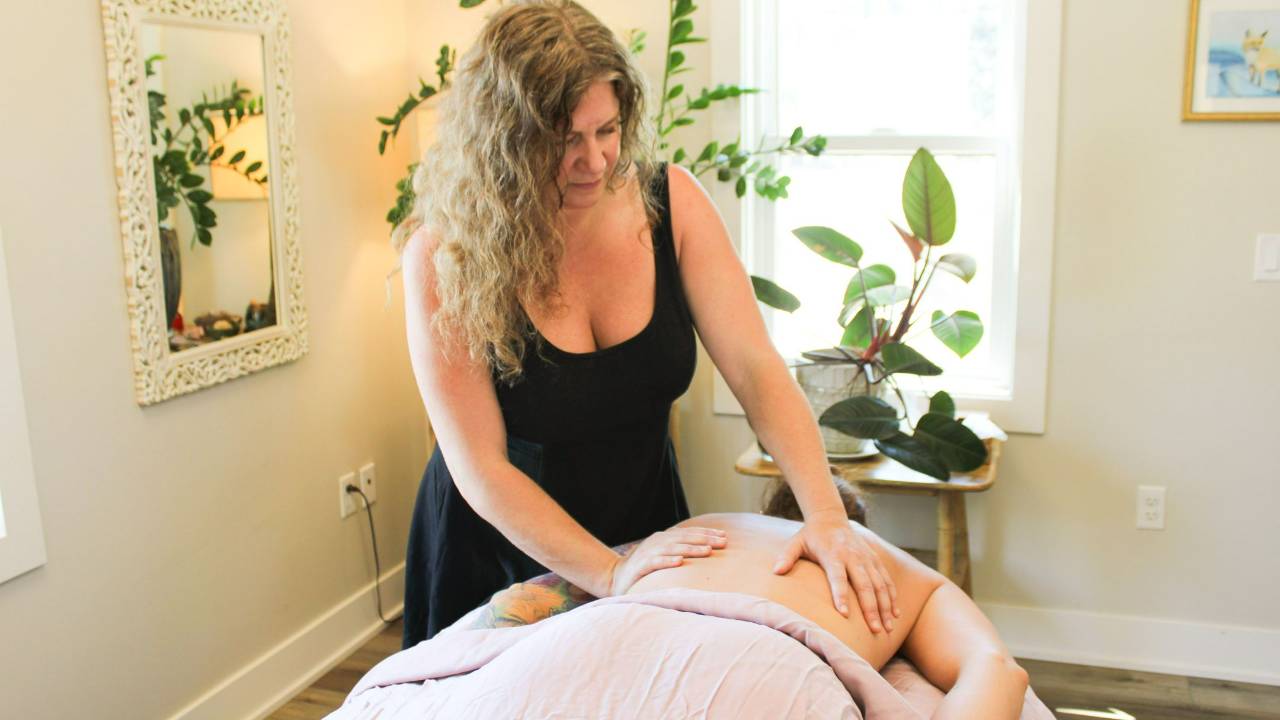
As we feel the season’s change bringing precipitation’s showers, rising shoots and spring flowers...it is time to transition from the cozy sedentary positions of wintery wonder into the active lively sunshine of spring then summer. With spring there is a natural expansion as the buds blossom, so do we. With the sun and longer days we thaw, we warm up from the cold winter and as a shoot roots each breath a little deeper, we too begin to rise from our slumbery hibernating states into the expressive movement of our full warmed aliveness. With the strengthening of our roots our foundation grows grounded and we can begin to plan and imagine the coming times as we align the center of each part of us, we can create and plan a beautiful paradise that is the inner landscape radiating from the warmth of the sunshine.
I have been working with a gardener, and she has been having some extraordinary pain in her back. She is slender and if you looked at her you wouldn’t suspect she is in chronic debilitating pain. She was in a sports accident and since then has had a hard time fully recovering and with the garden calling her attention she has been having a hard time getting out to complete her work. In the sessions she began to express some patterns when the pain crept up she had been in a conflict with someone she relates with frequently at work and as the conflicts got worse continued she began feeling increasingly uncomfortable. This has compounded her stress. There have been so many feelings that have led to a feeling of loss of control, negative mind frames and anger. She’s been directly relating her increase in pain to her environment. She needs a bigger pot. She has herniated discs at L1 and T12 the lumbar dorsal hinge. They must be calling us to be like dolphins here, that’s always what I think of when I hear dorsal, the dorsal fin. So this hinge is in the mid back right above what most people would consider the lower back which includes the lumbar and sacrum. And we call it a hinge because that’s what it is. It is a point in the back where the natural curves come together at a fulcrum and this is an area that is commonly injured. Her disks are bulging. These discs are where we weed from, if we diagonally pull or push any time where we cross laterally, lean forward and reach up this can be where the spine starts to naturally hinge at. What is challenging about this is that our spine becomes hyper mobile in the vertebrae that are hinging and then above and below the spine becomes compartmentally inept. Divided into larger segments crossing multiple joints the dysfunction of the surrounding muscles and fascia of the spine above and below leads to immobility and bone deterioration and disease.
What we want in the spine is mobility and stability. The shorter intrinsic muscles are more interior, closer to the bone. We want mobility in these shorter muscles so the bones don’t get yanked on or compressed. And we want the stronger bigger extrinsic muscles to be able to have a full range of contraction and expansion. They have more power so we want them stronger for stability. When trauma and injury occurs we tend to contract in the core of us. The psoas affects the vagus nerve and this can create chronic fight or flight symptoms. It’s a pulling in, and then we get the intrinsic muscles chronically tight, this leaves the outer muscles unable to complete the full range of motion and they can become shortened, atrophied and dysfunctional.
She has been feeling more free in her body with each session, she has decreased her pain by more than half and we are on her fourth session. She was dancing around the other day because she felt pain free in her body except for the low grade pain in her back that used to be at a 9. She is down to 4 and many consecutive periods of 3, sometimes 2. On a scale from 1–10, she’s getting great results with Myofascial Release. MFR releases fascial restrictions.
I had a client who had a stressful job, she was on her feet for days at a time with 12 hour shifts. As a health care practitioner she needed to make sure she was able to attend in critical care situations and be able to be available for life and death situations. She was on her feet for so long, and she was leaning, bending over and in awkward positions as a part of her work. In order to care for others and really be present for her patients she developed the ability to abstain from urinating for long periods of time. This was just part of the job, and she taught her body how to hold it. This can lead to issues over time like urinary incontinence. And I also just want to shout out to all the doctors, nurses, EMTs, paramedics, firefighters and first responders who are there for us in critical circumstances to support our community. Thank you for your service. It is powerful work to be there for people in their time of need and it takes a lot of discipline, focus and determination.
She leans towards the balls of her feet and she looks like she's racing around all day. We’ve spent a lot of time on the first lesson that I offer which is where do you distribute the weight in your feet? Because where we set our foundation (our feet) is where we end up at the end (our head). If we set a level foundation that is plumb then we can see the reflection of a true vertical line through the body’s joints and body weights. We want to evenly distribute the weight of our body into our feet, so that we can root like the plants into the earth. And when I read her body I keep feeling like she's a plant that needs transplanting to a bigger pot with more room and space for her roots. So I say, a few sessions in, that I keep wanting to say, "It’s time for a bigger pot." Does this make sense? "Yes it does," she says. And she comes back to say that yes, she had a conflict with a superior at work and had to say something. She’s decided it was time to go and so she set forth the actions to make it so. She chose the mystery to move, shift and find what feels most aligned for her in her work and what she does. She came in all happy having put the wheels in motion and said yes, it is time for a bigger pot.
Angela is a Myofascial Release Therapist and an Injury Specialist. She treats clients with acute and chronic injuries and traumas as well as those who value their experience and want to feel more space in their body and greater freedom and peace. She treats clients with Myofascial Release and can help you get pain-free and back to living your best life.
Categories
All CategoriesAuthor
Angela Rose
Author
Angela Rose is the founder of Sol Bodyworks, a Myofascial Release Therapist, Injury Specialist, and Presence-Centered Awareness practitioner. With more than 20 years of experience, she helps people move beyond chronic pain, restore natural movement, and reconnect with their bodies through compassionate, whole-person care. By integrating Myofascial Release, Presence-Centered Awareness, and coaching, Angela empowers her clients to cultivate lasting healing, resilience, and a deeper connection to themselves.