Pain is it Necessary in Bodywork
Jun 09, 2026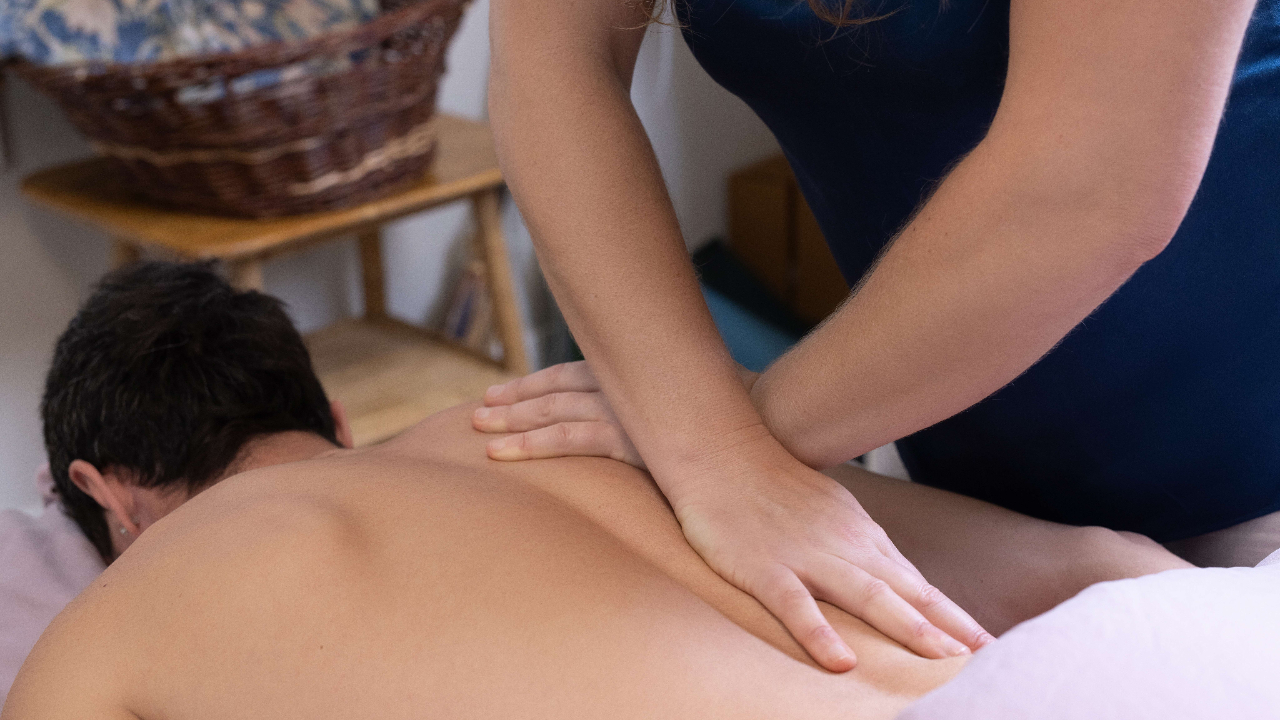
It is time for giving thanks. I love this time of Thanksgiving. My two teenage daughters and I decided to give ourselves the opportunity to relax at Sierra Hot Springs. We wanted to soak and delight in the huge buffet of their organic Thanksgiving feast. My girls both have jobs here in the local community. The girls and I have been working so much, we loved the idea of celebrating all the yummy options available, with none of the cooking and cleaning involved. What a treat!
I am so grateful to offer my healing hands in full service with Myofascial Release Therapy paired with Presence Centered Awareness Therapy. A client came back from a meditation retreat with a pearl of wisdom: usually it’s the harder choice that is the right one. It is in challenge that we strive and find our capacity strengthened and fortified. It is in the winter that the water is stored for the summer ground to flourish. And it is in our deepest pain that the seeds of regeneration can bloom, if we water, sun, and moon… we can drop into the greater knowing and integrate. Integrity means viable; it means necessary to make a whole complete; essential or fundamental.
Our theme of the week has been: everyone is a teacher. Some of my greatest teachers are those that I want to act nothing like. As the holidays settle in, it can be a time to enjoy our beloved family. It can also, by no fault of their own, be a time for many of our community members where the absence of family becomes highlighted. Many people I see are struggling with pain, and I have seen my clients feel ashamed that they are somehow defective or to blame for their physical limitations. It is imperative that we love ourselves. This is the deepest healing. To hold ourselves in loving compassion and get and give the help that is available to you. If you, or a loved one is in pain, I can help.
In my bodywork I have been taught how to see the body as a whole. When I body read, I get a sense of what forces shown in lines of tension (spirals really) pulling the body out of alignment. I got that sense from my advanced training in Structural Integration. I have been a structural integrator for 20 years and still consider myself one because my eyes and hands have been seasoned in this way. And it is hard work, both for the practitioner and the person receiving the work. The old school line of Rolfers was “to the table,” which was code for ignoring the person between you and the table, as far as their sensations and pain level.
My first Rolfer was a surfer from Kauai and he was a big dude. I was screaming in pain. It was too much for me and I thought I was being incredibly clear about the intolerable pain I was experiencing. He didn’t care. He convinced me to ignore and override the incredible urge I had to kick and punch him and run screaming off the table. And like a good girl, I ignored my inner guidance and obeyed.
Although in other practices we were already understanding that we could be sensitive to pain, I still bought into Structural Integration. Rolfing can be aggressive, and it doesn’t have to be. My teacher Lee Joseph at the Pacific College for Awareness and Bodywork taught quite a bit of massage techniques which helped with becoming sensitive in reading the signals of clients both verbal and nonverbal before we entered into the study of Structural Integration. One of which was Connective Tissue Therapy. Lee Joseph had created CTT from a variety of protocols that restored the flow in the connective tissues. We learned to stay below a pain threshold as we called it. If 1 was that you could barely feel it and 10 was that you’d be kicking and screaming out of the room, we wanted to stay below the threshold, which we informed our clients was a 7.
So the idea that pain was necessary for change was a strong pillar in the original training I received in Structural Integration. I have had a couple conversations recently with a Structural Integration teacher and their students, and they still carry a very similar form of reasoning. They talked about what we experience as pain can be perceived and understood as strong sensations, and of the people I spoke to they seemed to think pain was necessary for transformation.
What do I think? Well, this was my logic—I deemed pain necessary, but only until 2007. I began blending my craniosacral training with visceral manipulation and myofascial rebalancing. I realized I didn’t like pushing people past their boundaries, and neither did my clients. I think ultimately this train of thought—that we need to push the body past its pain, which is a signal from the body and the language of the body saying “no”—comes from the mind and ego.
It is what I thought as well because I was convinced through this reasoning to ignore the impulses my body was clearly communicating to me, to ignore and reject my boundaries as accurate, in order to use force to change the muscles and fascia and create structural change by forcing my body into submission. And after many years of this advanced study, I reject almost completely this idea.
I won’t say Rolfing or Structural Integration is all pain-based. There are some advanced Rolfers who do know how to finesse the tissue. And I think it can be non-consensual in its very nature. I also have mad respect for the training and the 10 series. I have found a better way for myself and my clients.
I get far greater results now with MFR than I ever did from Structural Integration—better decrease in inflammation, more mobility, better pain relief, and no pain during sessions. With MFR I feel I have found the key I had been searching for in all the other modalities.
The key is in the pace. I am not forcing. I am not moving the body past its boundaries. I am respectful. I move slowly into the resistance until I feel the tissue stop, then I stop, I hold there and ease up slightly. When I ease up then the tissue knows it’s in charge, and the body responds well to this.
I do not push the tissue until it gives and then move deeper into the fascial layers without consent. I do deep work, and I manipulate bones—it is only with the body’s yes.
My hands are communicating by listening. My hands are listening with all fibers and all cells. They are informed by what I am reading, sensing, and feeling. I don’t for once think I know better than the tissue. I say I am here for you… and I am listening.
The story held in the tissue is usually shown in movement as it unwinds. I assist the client’s initiation in this movement, in the body’s natural intelligence unfolding—the unwinding. The sacrum moves, the SI joints move, space is created with ease. It is like a journey the body takes, and the body is in control.
The knots, adhesions, sheaths, and layers of restriction unravel as I am present and intuit the needs and where these tissues truly want to be. Deeper and deeper the layers become unrestricted and flow is restored.
When your tissue is held and feels safe, it can release the binding. The unwinding that occurs is initiated by the body, and I support the supreme vast intelligence of the body. I am not forcing. I am present.
The key for me is to trust the body. To revere and respect means to listen to boundaries, to stay within the release zone, and not push too hard or too fast so the nervous system can unravel with nurturing guidance.
Newton’s law of equal and opposite force states that for every action there is an equal and opposite reaction. Therefore, we need to let the forces that have created the restrictions unravel, and then gently guide the body back toward center.
I want my work to leave the body realizing it was its own wisdom that initiated the movement back to center.
Angela is an Injury Specialist and Myofascial Release Therapist. She treats clients with chronic pain from injury, trauma, and surgery so they can get out of pain and back to doing what they love. She works in Grass Valley at Sol Bodyworks.
Author