Preventative Medicine Is The Best Medicine
Jun 02, 2026
Preventative medicine is the best medicine. Take care of your tissues, before you get issues. Your human anatomy is a creation of intricate design. How do you hold your posture? As you build yourself from the ground up, you fascia holds the structure that you are made of. The health of your fascia determines whether you are strong and toned as well as fluid, pliable and flexible in your muscular fascial system. If we look at the body in parts, we want each part to be functioning at it’s prime. We want a fluid connected feeling throughout the whole body that is in flow. So you can bend down to the ground and reach up and out with full mobility, strength and balance. You deserve to be living your best life in your prime, feeling balance and alignment in your body, without pain.
Myofascial Release is an advanced bodywork therapy that eliminates the restrictions in the muscular fascial system. You are a unique individual and so treating each one of your particular symptoms and parts, the whole body is essential. You are a unique expression, which is why the MFR approach works so well, because we listen. We listen to your experience and work on a treatment plan that targets these areas in the body that are out of alignment, which is the most effective treatment, one in which we hone in on your specific treatment goals, and we release and reorganized the fascia to free up areas that are restricted and limiting your flow of movement.
I had a client we’ll call him Trevor, he came in with an old back injury from his late teens. He had been in pain since then and he’s in his mid to late 30’s. I noticed right away, he walked with is heels close together and his toes turned out. Gate is so important in our fascial health, the mechanism of walking and how our feet are positioned in standing and the alignment of our gate and stride during walking determines how we distribute the loads. The position of your feet -the foundation of your body has so much to do with your hip health.
He was a large, tall man. He had a strong rotation in his upper body, and his right side upper back was nearly double the size in musculature as the left. He was having pain in his upper back under his shoulder blade on his left side, and his right side was the larger more inflamed side and seemed to be the tighter as well.
This old lower back injury was still causing a considerable amount of pain and immobility. He wasn’t able to go the gym which he loved doing, this kept him active and feeling in his body and he had been without the ability for many months, almost a half a year. He had a hard time being comfortable, sitting at the computer which was his livelihood, he struggled with knowing what to do because everything made this pain worse. He had upper back pain, lower back and trouble in his groin area-the hip flexors-the psoas. His gluteals were locked up and in a contracted position making them appear to be small because they were operating at 50%.
When I say small the external rotators I’m talking about the piraformis, gemellus, obturators which can be responsible for sciatica. These muscles are deep to the glutes - the internal posterior muscles responsible for the leg position were in a contracted hyper tension position.
The gluteal muscles didn’t have their full range of motion. We want the glutes to be able to fire and then relax completely. In a chronically contracted state the internal muscles can cause atrophy in the glutes, this can further make the glutes appear small, which brings the sits bones (both left and right ischial tuberosity) closer together, This can restrict and shorten the pelvic floor muscles, can create pelvic torsion (unequal tension, pulling in opposite directions) stronger, and can also bring the psoas into a tightened contracted state.
The psoas is the core-est of core muscles and it spans from your inner thigh - upper femur to your 4 lumbar vertebrae all the way to your lowest last rib. The psoas is the only muscle that connects your legs to your rib cage. When the psoas is tight the body can go into a state of fight or flight. When the length of the psoas is in a chronically shortened position it can impinge the vagal nerves.
The vegus nerve is responsible for your parasympathetic nervous system. The vagus nerve, also known as the vagal nerves control specific body functions such as your digestion, heart rate and immune system. These functions are involuntary, meaning you can’t consciously control them. Your parasympathetic nervous system controls “rest and digest” functions. It’s the opposite of your sympathetic nervous system’s “fight or flight” response. These two nervous systems make up your autonomic nervous system. This system controls involuntary body activities.Your left and right vagal nerves contain 75% of your parasympathetic nervous system’s nerve fibers. These fibers send information between your brain, heart and digestive system.
Because there are so many muscles (all surrounded by fascia) that attach to the pelvis from all sides, all sides operating seamlessly is ideal. Often times when the glutes (back side) are only doing a portion of their responsibilities, to compensate the quads (front of the upper leg) do too much. The quadriceps attaches- originates to the front of the hip and inserts at the knee and are responsible for lifting the leg upwards and forward.
Usually the glutes are not in full function when the lower back is injured. Often times when your body goes into a a stress state it becomes more difficult to find a position where there is no pain. When you compensate to avoid pain, your movement patterns can further weaken the part you are favoring. This can stress joints surrounding the injured area either above and below or front and back and side to side. Your body is trying to maintain a balanced position and the surrounding joints will try to share the load which can move the body further out of alignment. This can result in micro tears in tendons and ligaments as well as the fascial restrictions becoming more wide spread.
After years of ongoing pain Trevor decided to try MFR. Even though he is a tall man of size he has been very impressed with how he feels and the results he is getting from Myofascial Release treatments. He is on his third series. He did two intensives back to back, so he came in every day for the 6 treatments x 2. He is no longer in constant pain. In fact he has been reporting that he is not in pain. He also came for a movement sequence that I teach that lengthens the psoas and rebalances the pelvis. So he is maintaining the excellent results he received with MFR with his own exercise routine.
Trevor also embraced Presence Centered Awareness Therapy. This work can be done during treatment and is a synthesis of consciousness awareness tools that help to process unresolved emotions and mental behavioral patterns in the body. Trevor really dove into this work and benefited greatly. Trevor had been abused quite often growing up, he had been so frequented by fear and also felt he was carrying unresolved anger in his body. He felt the sensations and emotions as he remembered and was able to release the weight and pain from these traumas stored in his muscular and fascial memory.
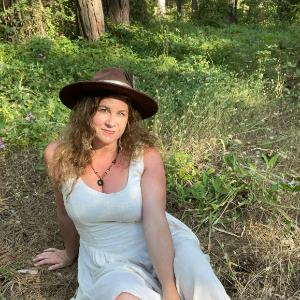
Angela is a Myofascial Release practitioner and an injury specialist. She works at Sol Bodyworks in Grass Valley. She books MFR sessions and intensives to bring you back to feeling at home in your body.
Author