Texting, Is It Creating Tension on Your Spine?
Jun 02, 2026
When it comes to the neck it is a product of the principle as below so it is above. When there is tension in the neck shoulders and head it has to do with the culmination of mechanics developed from the ground up, and the end result is in the bobbing bodyweight at the top of your structure. So often I tell people a fundamental, when a side of the body feels pain and symptoms (and there is always a side) often times the other side is tight. When we have strong sensations in a shoulder and it won’t let up, most often the side that is overstretched has strong sensation. The side that is tight is tense and bound so the tissue has less innervation and thus has less feeling, so it is pulling tissue out of place from the other side and the overstretched side sends the signals and shows signs of pain and inflammation. And so, it is important not to overstretch an already weaker, more vulnerable body part, thinking that the pain means that it is too tight and needs to be stretched.
We are made of parts and most muscles and groups of muscles have equal and opposite muscles and groups to counter balance the tension. When we look at kinesiology we study movement, and what parts are responsible for which actions. When we are in balance our front body and back as well as left and right side body are able to stay in an active/relaxed state one of engagement. In Nia we call this dynamic ease. Poised and ready-RAW relaxed, alert and waiting. When we are actively engaged nothing is static, it is in a spiral. As the body is designed. We have no straight lines.
Tendons and muscle cross joints from origin to insertion to accommodate spiral, radial movements in the joints. We are fluid and dynamic, and we want our muscular facial system to have equality-equanimity. The opposite muscle is called the antagonist muscle. A well known one would be the lower back and the abdominal muscles. These muscles have a relationship called reciprocal inhibition. Which means that when one fires the other must release. The low back tightens the abdominals release. Which is why it is important to strengthen our weaknesses so that we can stay in balance.
I went to Thailand in 2002-2003 to study Thai Massage. I studied Thai Massage for a couple of months at a medicine hospital in Chang Mai and traveled to the north to Pai. In Pai, I met Sebastian at this little retreat with bamboo cabanas an outdoor communal kitchen with a huge grassy yard next to a stream and a walks distance from town. Seb was a classic French man with herbed buttered toast every morning, he would stroll up with a baguette in hand in his black turtle neck. He was such a good brother, he taught me Qi Kong at the misty streamside before dawn. He did Zen Shiatsu sessions on me and I felt the spirals of the work circle inside of me. I would teach Nia in the grasses and we would often move together showing each other our discoveries. Seb had been to stay with monks in China for several years.
One night he taught me the wheel, in partners, where one person laying on the ground with their legs straight up the other person is standing at the top of their arms looking up at them. Both of us grab each other’s ankles ... the trick is to jump and tuck your head and roll. In our Human Wheel, we rolled all over the yard that night in the full moon. I wanted to learn more about Zen Shiatsu and he directed me to Oda Bogger in Doi Saket. She had a teak house she had made into a matted dojo. I stayed on with Oda as her to apprentice and learned Thai Qi, Qi Kong, Reiki, and Zen Shiatsu.
Zen Shiatsu is a Japanese form of bodywork. It is the way of the Tao. Balance is key in all life forms, in the cycles, the seasons and to us. Zen Shiatsu is based in restoring the balance within the human body and is a practice of deeply listening. In western society we are busy. We are concentrated on production. We have overly yang in our ways of living and being. There is an over emphasis in doing, and most people suffer from an overly active mind, where they command their circumstances and surroundings. And bring their body to exhaustion. The breaking point. In Zen Shiatsu there is Kyo and Jitsu. Kyo is the place of need, it is the not enough energy, the weak. Jitsu is the too much energy, the busy the over performer. In Zen Shiatsu there is a listening hand and moving hand, there is a a yin and yang. When the yin listens and hears for places in the body that are Kyo the moving hand stops and holds this place of need. And as if to syphon the energy from the place of too much- Jitsu, the (moving) now still hand holds this Kyo- the place of need. The practitioner draws energy to it. As it fills the energy -Qi fills the place and the tissue becomes different. It is filled with life force and has more space and more volume, the difference in tissue tone is palpable. Bolstering our places of need, helps to balance and give attention to what is not paid attention to. Where the most need is, is where we need to pay the most attention to and give the most energy to.
Our primal state as animals is often overshadowed by the long hours in sedentary positions that desk and computer work demand. Or, we have repetitive movements that active work demands. Even doing dishes asks us to be in a forward bent position that can be painful for the lower back because by leaning forward, the weight of the skull increases the tension load on the spine. Even a slight increase in forward flexion can greatly increase the pressure and compression of the spine. Which is why Text Neck is a real thing. Children today are being give phones and tablets so early that the development of the spine is being altered. Chronic misuse and overuse of cell phones can do physical damage to the vertebrae and spinal cord as well as block the innervation and fascial balance of the neck, shoulders and arms.
Myofascial Release is a specialized form of bodywork that uses time and pressure to melt the tissue into balance. MFR is the best way I have found to release the fascial restrictions. Fascia is a matrix of collagenous materials that vary in density from blood to bone, your organs, skin and nails, the barriers that are membranes, the tendons, that flex and extend...at a cellular level all wrapped and bathed in fascia. Each cell is wrapped in fascia, every single one. Fascia informs and communicates and holds memories and emotion in all of these varieties of connective tissue.
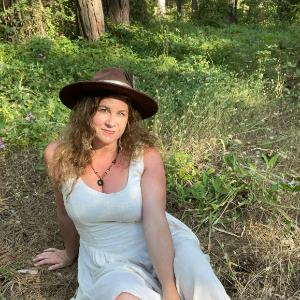
Angela Rose works at Sol Bodyworks in Grass Valley. She has been practicing since 1999. She is a Myofascial Release Therapist and an Injury Specialist. She helps clients with acute and chronic injuries get out of pain and back to doing what they love with Myofascial Release.
Author