The Pelvis is the Body’s Mind
May 29, 2026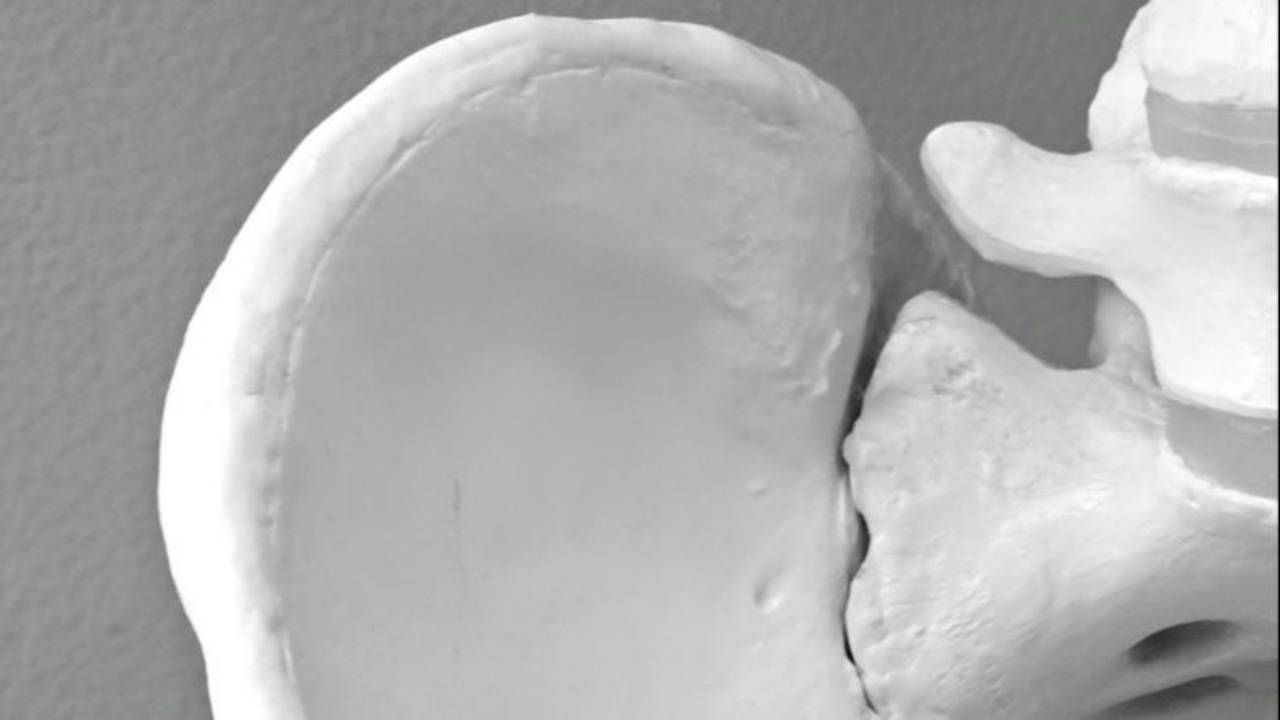
What does it take for you to stay in balance, to feel good, to be more aware and alive in your body? When you think, and get carried away with your work, projects and production do you get distracted from how you hold your body, your posture, during computer work, while sitting, when doing repetitive motions? Does it feel like you’re fighting against gravity, do you have a hard time holding postures for hours and then feel stiff and tired?
If you have pain, immobility, tension and stress in your body, it can be difficult to stay in your body. Oftentimes I have clients who are not feeling happy or good in their bodies, they have tried many things and they have been dealing with pain for so long...they either have gotten used to living with the pain, or it almost drives a part of them mad. Have you ever felt trapped in your body, or sensations that are extreme and you just want to run away or avoid your body? Have you ever gotten hurt and then been upset, with your body, as if your body is not good enough. Maybe you have been mad at your body for not working as hard and as fast as you think you should be able to?
I have spent my life helping people get out of pain, and pain can be trappy in its nature. It’s resistance and it appears physically. Tension has a snowball effect, it can wind up from one injury into mobility and inflammation into other areas of the body.
And, avoiding being present in your body can lead to greater pain, immobility and stress. When you are hurting and in pain it’s important to listen to your body and get the care that will help you feel better. You house everything you eat, say, feel, our thoughts, either if you are conscious or unconscious of them, each aspect of yourself inside of your body, all living in your body. Each experience we have had has had a tangible imprint in this body. The body does everything for you, when you need something it will go and grab it, if you need to bend down, your body is there. How often in your day are you present, listening and noticing, attentive and caring for your body? And with all the work and effort your body makes, do you reward yourself with healthy medicine that feels good? And what about enjoying life, what about feeling good in your body? Do you take enough time caring for your body like it cares for you? And what are the things that help you feel better, when you have pain?
For over 20 years I have been treating fascia. I am a Myofascial Release Therapist and an Injury Specialist. I treat clients with MFR, a specialized form of bodywork. With MFR, I find excellent results for people who want lasting pain relief, more mobility, better balance and alignment. I work with people who have broken their bones, are considering surgery, have had surgeries and are still experiencing tight, stiff, nerve, tingling, twitching, spasming, stabbing, numb, throbbing sensations. I work with people who have severe scoliosis, spinal cord injuries, migraines, hip and knee replacements, shoulder and neck injuries. With MFR, I get superior results for people who have pain, and want to get better, feel more active and healthy, and be able to do the activities they love.
I have a client who has a sacrum that winds up in tension. We have been working to stabilize her pelvis. When the pelvis is unstable this means the ligaments, tendons and fascial sheaths that attach to the bone are unevenly tensioned. This large winged spanning bone of the ischium, ilium and pubis, known as the hips. All one bone in the shape of a butterfly. The width of the hips spans from the wide wings of the ischium, to the lower smaller wings of the ilium to the front of the pubic bone.
There are a multitude of muscles that connect to the pelvis to stabilize it. Oftentimes one side is more wound and bound up, tighter than another, this goes ilium for all six sides of your pelvis. And really each muscle, ligament and the fascia that connects and surrounds each muscle and ligament cell. Each ligament, crossing a joint that connects your pelvis together.
When your hips are tight and contracted especially unevenly this can lead to quite a few problems. When the lower back is in pain, this can be caused by your pelvis being misaligned, which can transfer shearing force to your spine. Asymmetry around joints tends to increase the tension in that joint and affects the tension in the rest of the body, one side gets too strong the other side gets too weak. Fascia wraps everyone of your cells, so we want our fascia connected, not isolating and compensating.
Because the joints of the pelvis are reinforced by thicker denser fascia, the ligaments of the pelvis can shorten and harden. Becoming chronically tight with a density of bone, these intrinsic tissues don’t as easily relax.
When we have fallen, even if it was when we were younger, these memories are stored in the tissues and structures of the body, and the body grows scar tissue in response, to protect. As an actual physical imprint on the fascial layers, these living tissues remember and will create scar tissue, adhesions and fascial restrictions to brace for the impact. When we have not felt safe in life, our tissues have a living record. This is why it is so important to find healing and ways to help these parts of ourselves that can still feel unsafe, unheard or unmet decades later.
The thing about healing is that on a deep level it’s not just about the injury, it’s about how you felt, what you said to yourselves about it, what kind of feelings and thoughts did you take on, and believe about yourself, or entertain. There may be ways in which this has altered the course of your life.
When I treat the fascia I am treating all the layers with my pressure. I have developed the sensitivity to be able to use the pressure and force of my whole body, and to be sensitive to the more sensitive structures that cover the deeper layers. Because I am working with the fascial system and in deep listening to the states and structures of the tissue, we get to deep and deeper layers. Without pain during treatment. We are able to be present and contact what may still feel unsafe, what is holding back so that with breath and softening you can learn how to deeply relax, and be able to talk to your body nicely, so your body wants to listen. So the relationship with your body is one where you feel connected and centered, balanced and vibrant.
You deserve to feel good in your body. With Myofascial Release I help you solve your chronic pain patterns, to get you out of pain and back to doing what you love. Angela Rose is in Grass Valley at Sol Bodyworks.
Categories
All CategoriesAuthor
Angela Rose
Author
Angela Rose is the founder of Sol Bodyworks, a Myofascial Release Therapist, Injury Specialist, and Presence-Centered Awareness practitioner. With more than 20 years of experience, she helps people move beyond chronic pain, restore natural movement, and reconnect with their bodies through compassionate, whole-person care. By integrating Myofascial Release, Presence-Centered Awareness, and coaching, Angela empowers her clients to cultivate lasting healing, resilience, and a deeper connection to themselves.